
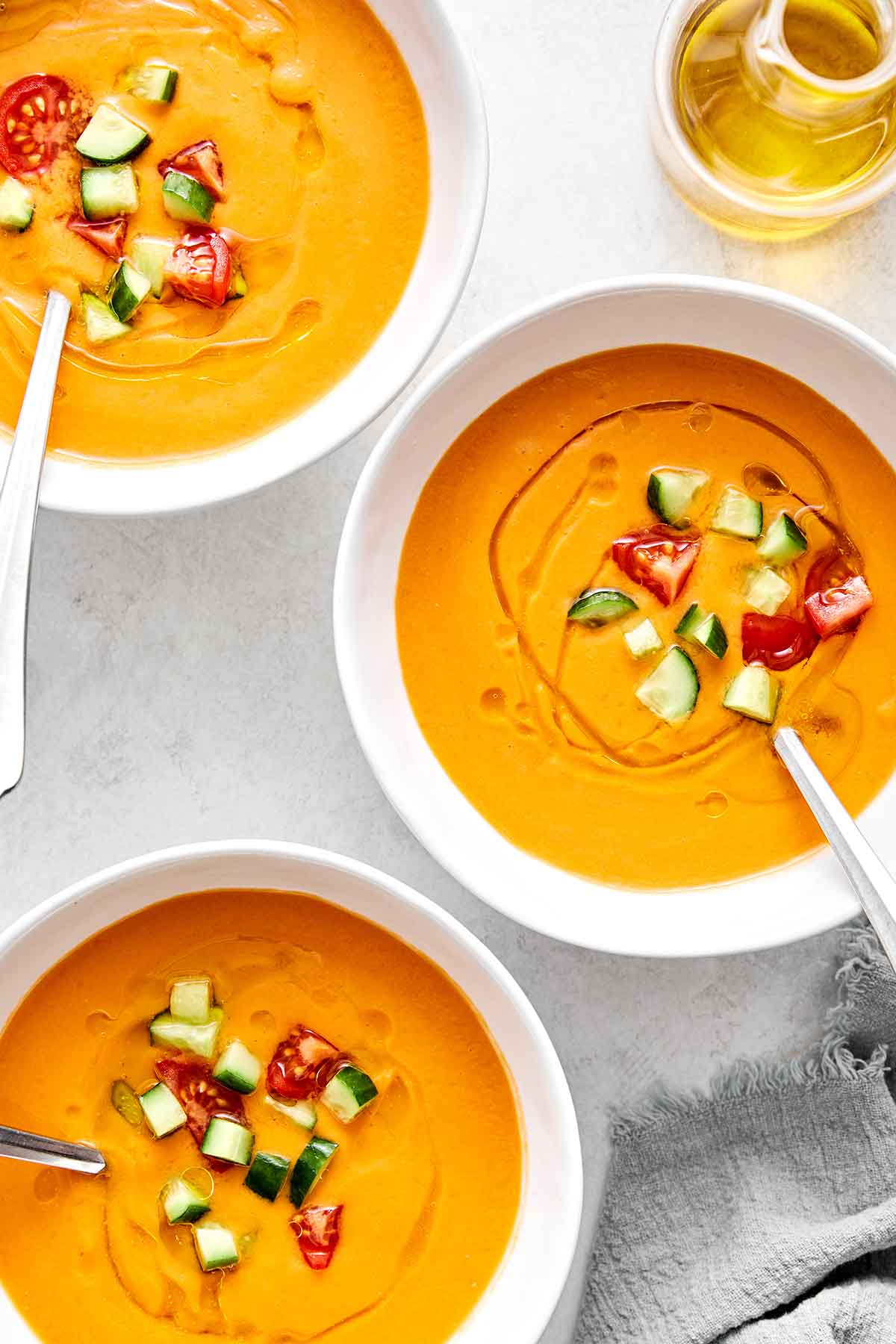
This Andalusian-style gazpacho is a classic Spanish soup that’s chilled, naturally thickened (without bread), and ideal for warm summer days. It’s incredibly fresh with vine-ripened tomatoes, juicy cucumber, and a handful of aromatics. Plus, it couldn’t be any easier to make!
This post may contain affiliate links. See my disclosure policy.
Why You’ll Love My Gazpacho
- It’s filled with classic flavors, yet gluten-free. While some Spanish households blend in day-old bread for a thicker, creamier texture, Andalusian-style gazpacho skips bread entirely for a lighter overall soup. That’s the version I was inspired by!
- It’s the best way to use ripe summer tomatoes. Since it’s peak summer tomato season, tomatoes are in abundance in the markets and your gardens. And this tomato-centered recipe is a great way to use them!
- It can (and should) be made ahead of time. After sipping on leftovers the next day, I’m definitely convinced that this tastes even better when you give it more time to meld in the fridge.
As much as I obsess over salads during the summer, I also appreciate a bowl of this refreshing gazpacho. It was one of my favorite dishes I had in Seville, Spain to beat the scorching summer heat (that heat was no joke!). And now at home, I’ve made it repeatedly for the perfect summer meal while we’re in the thick of tomato season and a local heat wave.
The spaniards are definitely on to something because as much as I love my tomato soup in the winter, I’d much rather not cook over a hot stove when it’s over 90°F outside. And all you need to make this gazpacho is a blender—brilliant, right?! It’s minimal summer cooking at its best.
If you love gazpacho, there’s also white gazpacho (ajo blanco) made with cucumber, grapes, and almonds (I have a recipe for this in my Healthy Meal Prep cookbook), and a modern day green gazpacho (similar to my oldie but goodie cucumber melon gazpacho). But if it’s tomato season wherever you are, this classic red gazpacho is the one you’ll want to make!
Gazpacho Ingredients
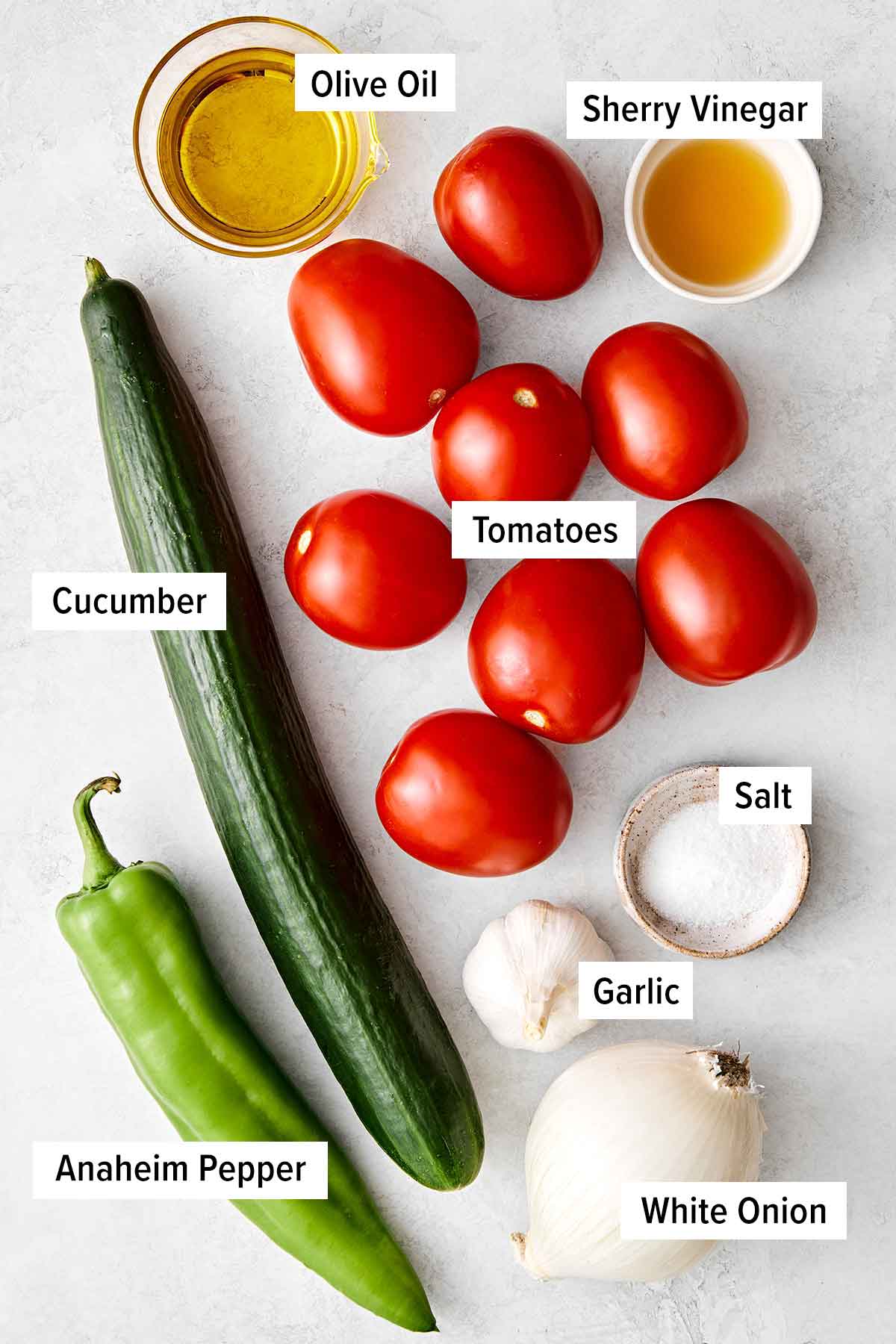
- Red tomatoes: Since tomatoes are the key ingredient, tomatoes picked at peak ripeness create the best flavor. You can use vine-ripened, heirloom or Roma (plum-style) tomatoes. Vine-ripened may create a slightly thinner gazpacho while Roma may create a slightly thicker gazpacho.
- Anaheim or cubanelle pepper: Both of these peppers have a mild, slightly sweet flavor, which won’t overpower the tomato base. I typically use an Anaheim pepper. And while green bell peppers can be used, they can taste a bit grassier and bitter, so it’s not my preferred choice.
- Cucumber: I’m using English cucumbers to add a refreshing undertone and a bit more water that contributes to the soup’s light, silky texture. Plus, you don’t need to peel them like you would garden cucumbers.
- Garlic and white onion: White onion adds body to the soup. And when it comes to the garlic, less is more (trust me!). Raw garlic is more pungent than cooked garlic, and a high-powered blender amplifies the flavor. So start with a small garlic clove!
- Sherry vinegar: Sherry vinegar is what gives this soup its punch of brightness with a touch of acidity.
- Olive oil: This is one recipe where the olive oil is a defining ingredient, and not just used for sautéing, so grab a good quality one! The olive oil emulsifies the the tomatoes and vegetables to create that naturally creamy and silky texture.
Lisa’s tomato tip: I tested this recipe several times with different tomato varieties. And my key takeaway is that quality matters more than the variety. Meaning, a vibrant red tomato picked in peak August ripeness beats an underripe tomato, of any variety. So always grab what looks best at the market!
Find the printable recipe with measurements below.
How To Make Gazpacho
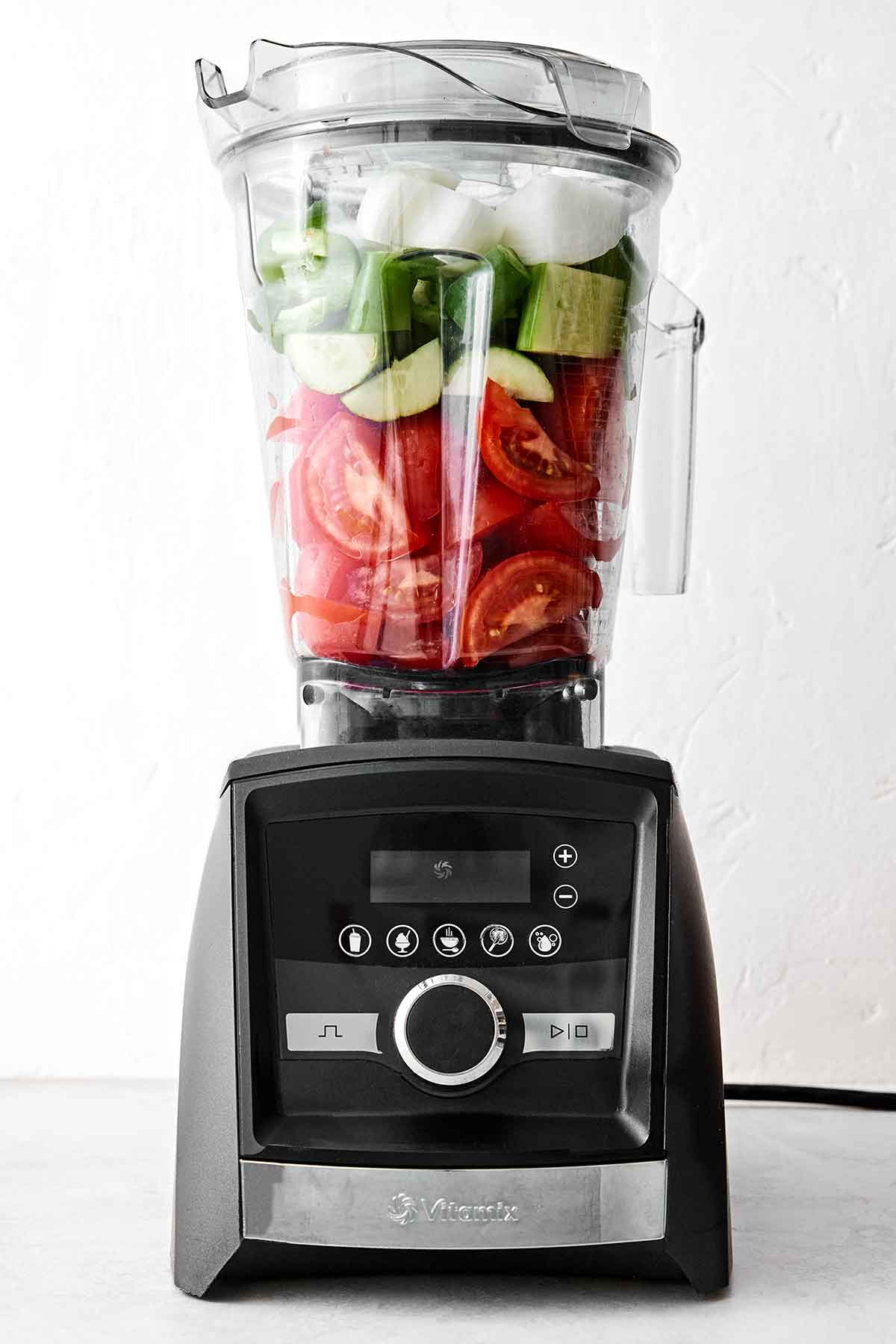
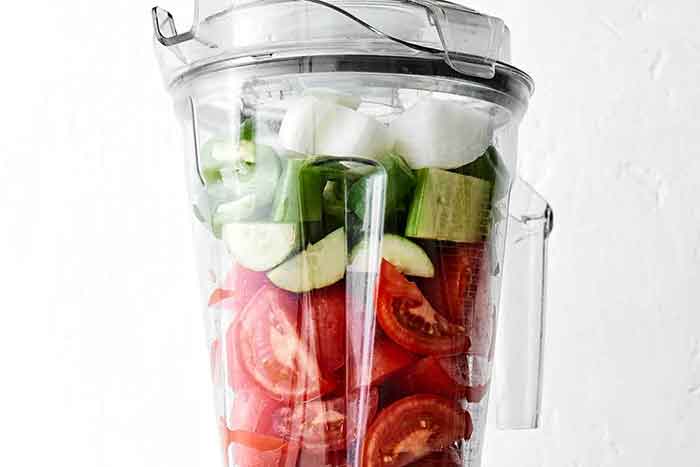
First, blend the vegetables until smooth. Simply add the tomatoes, pepper, cucumber, onion, and garlic to a high-powered blender, and blend until completely smooth.
My garlic tip (again): If you skipped the ingredient section above, always start with a little less garlic than you think because raw garlic can have a stronger flavor, especially after it chills in the fridge. If you find it needs a bit more garlic, you can easily re-blend the soup with another half clove.
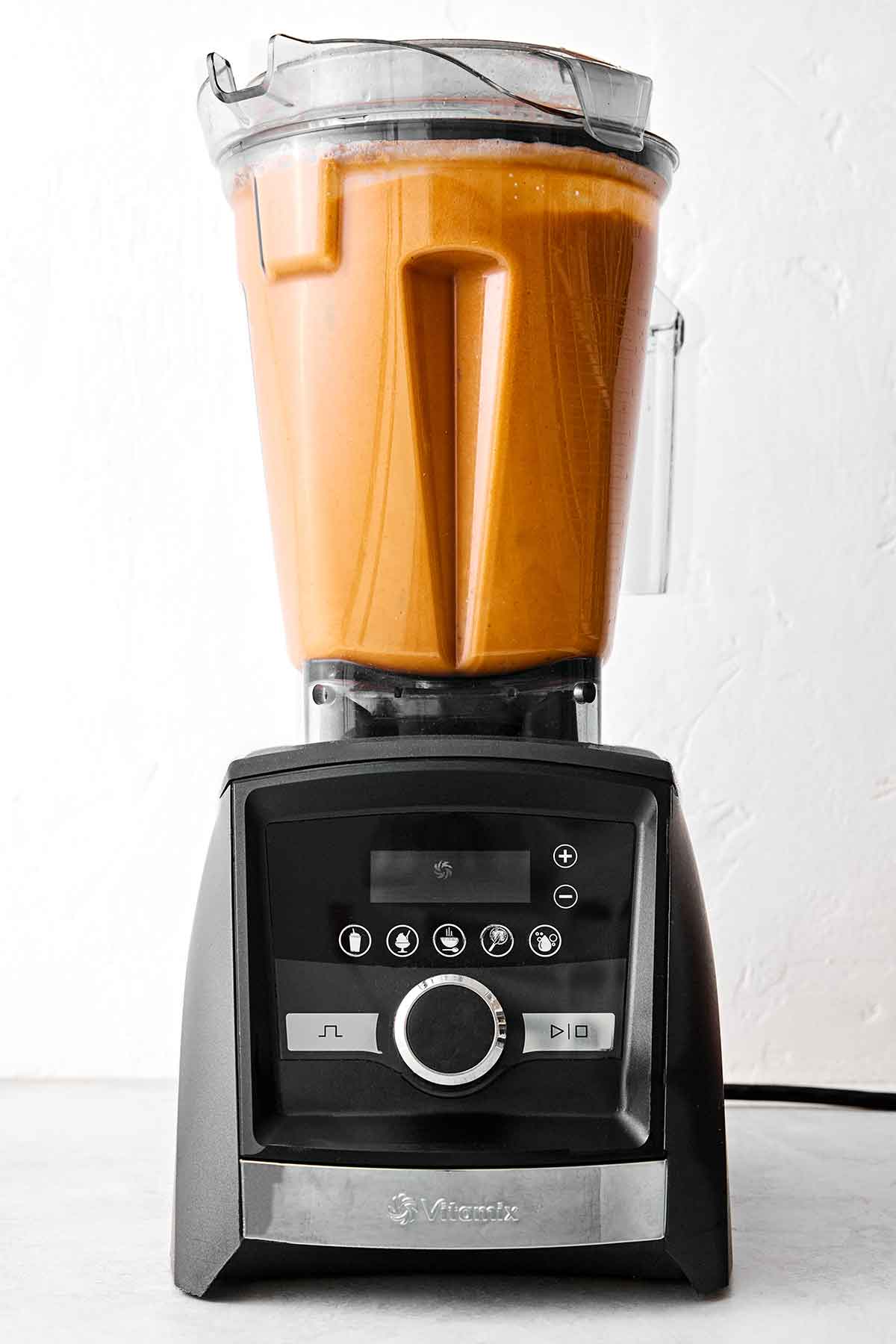
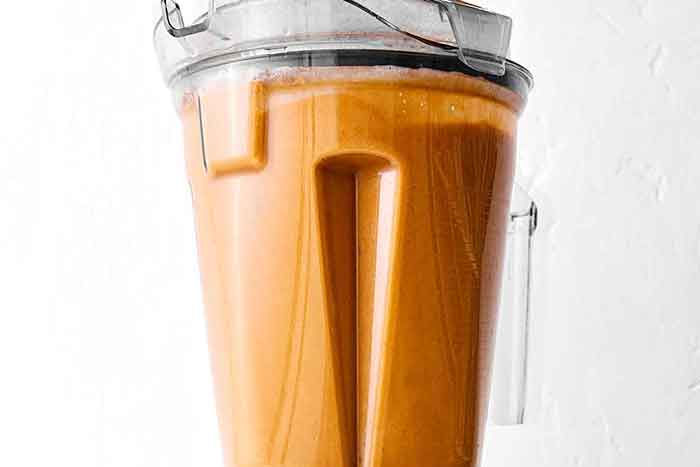
Second, slowly drizzle in the oil as the blender is running. The goal here is to create a smooth, silky emulsion, and the best way to do that is to slowly stream the oil in. You’ll also start to notice that it changes color into a gorgeous reddish-orange tone. Once you’re done blending, do a little taste test to see if you want to add extra salt or sherry vinegar.
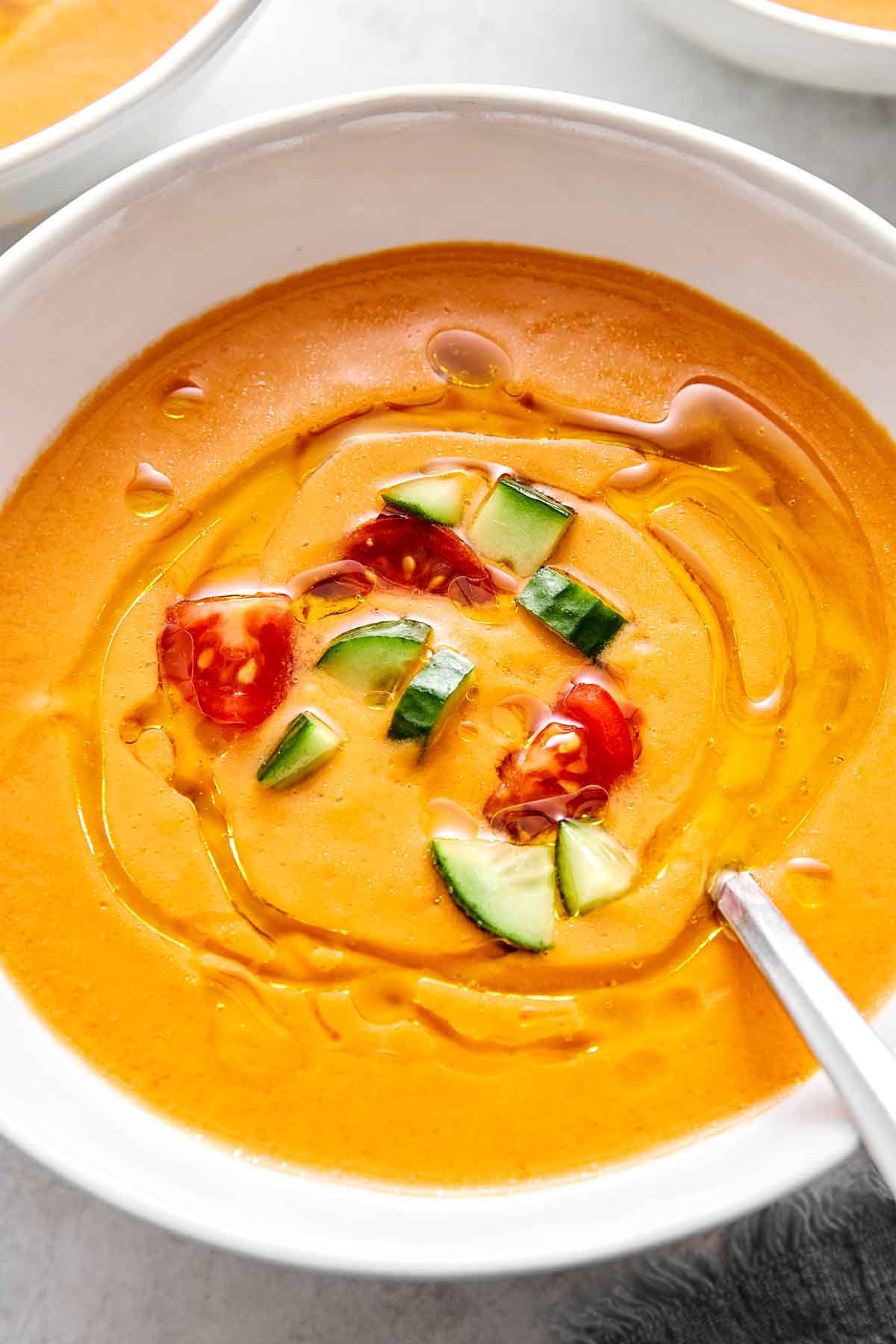
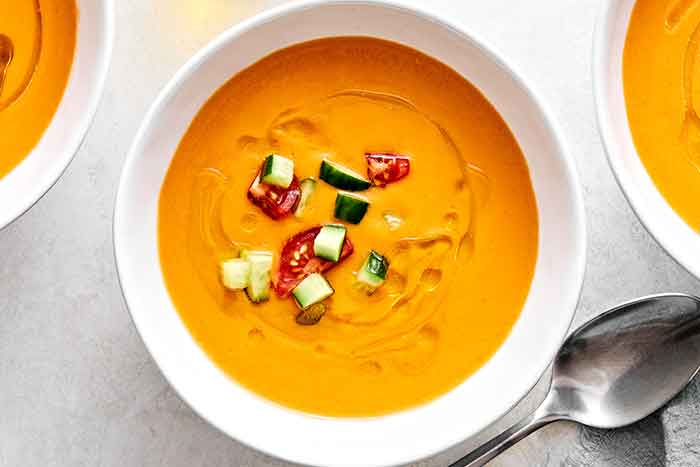
Lastly, let the gazpacho chill for at least 2 hours. Although you can serve it fresh, it’ll taste 1000x better if you give the flavors enough time to meld. Then, serve it cold with an extra drizzle of olive oil on top. Even better? Add extra small diced cucumber and tomatoes on top (my favorite!).
Storage Tips
➜ To store: Leftovers of this are the best since it tastes even better the next day. Store it in an airtight container in the fridge for up to 4 days. Before serving, you’ll notice a little separation, so just give it stir and it’ll be good to go.
➜ For freezing: I’ve had frozen gazpacho before, and I’ll be honest, I think fresh is best because it does become slightly watery when it thaws. But if you’re okay with that, it can be stored in the freezer for up to 3 months.
Frequently Asked Questions
Yes, you can. Although fresh tomatoes are best, good-quality canned tomatoes are a great option for making this off-season!
If you don’t have a high-speed blender, you can strain the gazpacho through a fine-mesh sieve before chilling, for the silkiest smooth texture. But I find that my Vitamix does an amazing job of creating a really smooth gazpacho on it’s own, so I don’t usually strain it.
When I had this in Spain, it was often enjoyed with other tapas such as jamon and cheese, olives, romesco sauce, grilled seafood or grilled chicken. And let’s not forget a glass of sangria. 😉 But you can treat it as an appetizer, light lunch, or dinner side dish. Any meal where you want to add fresh, bright flavor!
More Vegetable Soup Recipes
- Zucchini Soup: Perfect for summer zucchini season.
- Cabbage Soup: A light and low-calorie soup.
- Lentil Soup: It’s packed with Mediterranean flavor!
- Or browse through more soup recipes!
If you try this gazpacho recipe, let me know how they turn out in the comments below! Your review will help other readers in the community. And if you’re looking for more healthy food inspiration, join my free newsletter here.

Description
Video
Equipment
Ingredients
- 2 pounds ripe red tomatoes, cut into chunks
- 1 Anaheim or cubanelle pepper , stemmed, seeded, and cut into chunks
- 1 medium cucumber, peeled and cut into chunks
- 1 small white onion, peeled and cut into chunks
- 1 small garlic clove
- 1 tablespoon sherry vinegar
- 1 teaspoon kosher salt
- ⅓ cup extra-virgin olive oil
Instructions
- Blend the vegetables. Add the tomatoes, pepper, cucumber, onion, and garlic to a high-powered blender. Blend until completely smooth.

- Add the oil. With the blender running, slowly drizzle in the olive oil to create a silky emulsion. It will change color as it blends to a reddish-orange color. Taste, then add the salt and sherry vinegar, and continue blending until smooth.
- Chill. Chill the gazpacho for at least 2 hours. Serve cold with an extra drizzle of olive oil on top. Note: If you don’t have a high-speed blender, you can strain the gazpacho through a fine-mesh sieve before chilling, for the silkiest smooth texture.
Lisa’s Tips
- When it comes to the garlic: Always start with a little less garlic than you think because raw garlic can have a VERY strong flavor when blended in high-powered blender. The blender actually amplifies the pungency of it. If you find it needs a bit more garlic, you can easily re-blend the soup with another half clove.
- Storage tip: Store leftover gazpacho in an airtight container in the refrigerator for up to 4 days. Stir well before serving, as some natural separation is normal. For the freshest flavor, enjoy it chilled straight from the fridge. While you can freeze gazpacho for up to 3 months, the texture may become slightly watery after thawing. Blend or whisk well before serving.
Nutrition
©Downshiftology. Content and photographs are copyright protected. Sharing of this recipe is both encouraged and appreciated. Copying and/or pasting full recipes to any social media is strictly prohibited.

My Favorite Part of Making Gazpacho
One of the things I love most is watching the olive oil transform the soup from a muted color into the most beautiful and vibrant orangish-red color. When you stream that olive oil in slowly it’s quite amazing how it emulsifies the soup. You wouldn’t think olive oil would actually thicken the soup (you’d think it would make it more loose, right?), but it really does thicken it up! Make sure to watch my video above to see how I do it. 😊


This gazpacho recipe is outstanding. I love it and will be making it the rest of the summer as long as my garden tomatoes hold out! The flavors are so vibrant and tasty. I didn’t have sherry vinegar so I used white wine vinegar. I think the flavors blend so well together that it beats making traditional chunky gazpacho. Thank you for sharing!
Thrilled to hear you’re loving this gazpacho for a late summer meal to use up all your tomatoes, Arlene!
This soup is simply refreshing with beautiful flavors. I love how easy it is to make and works great with all the tomatoes in my garden that I can’t keep up with. A wonderful quick meal to share with a neighbor.
I’m so glad you enjoyed it, Sadie! And how nice of you to share it with your neighbor. :)
This gazpacho was easy and delicious! It’s a great way to eat vegetables in the summer. My boyfriend is from Spain and makes a similar version. I should not have added jalapeño.
Thrilled to hear you enjoyed this gazpacho so much, Anna! It really is one of the best ways to enjoy fresh summer veggies.
This is the easiest gazpacho recipe I’ve ever found–and delicious! What a great way to use the bounty of summer tomatoes, cucumbers and peppers here from our home garden in NJ. Gets even better the longer it chills in the fridge. Perfect way to get your veggies without heating up the kitchen. This recipe is a keeper. Didn’t have sherry vinegar so subbed with equal amount of balsamic vinegar and was perfection!
Hi Katie – I couldn’t agree with you more. This soup is the perfect way to enjoy summer tomatoes! I’m so glad you love this recipe.
I made this with some big, juicy heirloom tomatoes. It’s so easy and turned out delicious!
Yay! Glad your gazpacho turned out perfectly, Patty.
Isn’t better if you peel the tomatoes? Why did you skip the bread?
Hi Garry – I skip the bread as I’m celiac and can’t have gluten!
As this is my first time making gazpacho, and gluten free as well, I am hooked! My garden is overflowing with heirloom tomatoes, as well as fresh garlic and onions. Cant wait to make more! So delish! Thank you!
I’m so glad your first gazpacho was a success, Lynette! I’m sure it tasted amazing with fresh heirloom tomatoes from your garden.
Is there something you could substitute the cucumbers with?
Looks fab!
I intend to make this, as I enjoy your recipes very much! Is it necessary to blend until completely smooth and silky? We like chunky soup. I would blend most of it and then add the rest of the veggies, keeping some texture. Thanks!
Hi Jill – If you prefer a chunkier soup, I’d blend most of the ingredients until smooth, then stir in some finely diced tomatoes, cucumber, and bell pepper at the end for extra texture and crunch. I hope you love it!
Thanks! I am making it today. I enjoy your videos but often times they don’t run. Is it a glitch on your end or mine? I have a young friend that would benefit from your wonderful videos….
Hi Jill – Thanks for letting us know! Sometimes, they can take a bit of time to load, but we’ll be sure to fix that.
Can I use a food processor since I don’t have a blender? Also is it spicy with the pepper. I don’t do spicy at all. Thank you
Hi Christie – A food processor will work, but it won’t be as silky smooth as a high-powered blender. If you don’t mind a little texture, go for it! And don’t worry about the pepper—it lends more flavor than heat. Enjoy!