
Poached eggs are a beautiful thing. The whites are just firm enough on the outside to contain an oozy, golden yolk in a round little egg package. And with a few tips, you too can learn how to poach an egg perfectly every time!
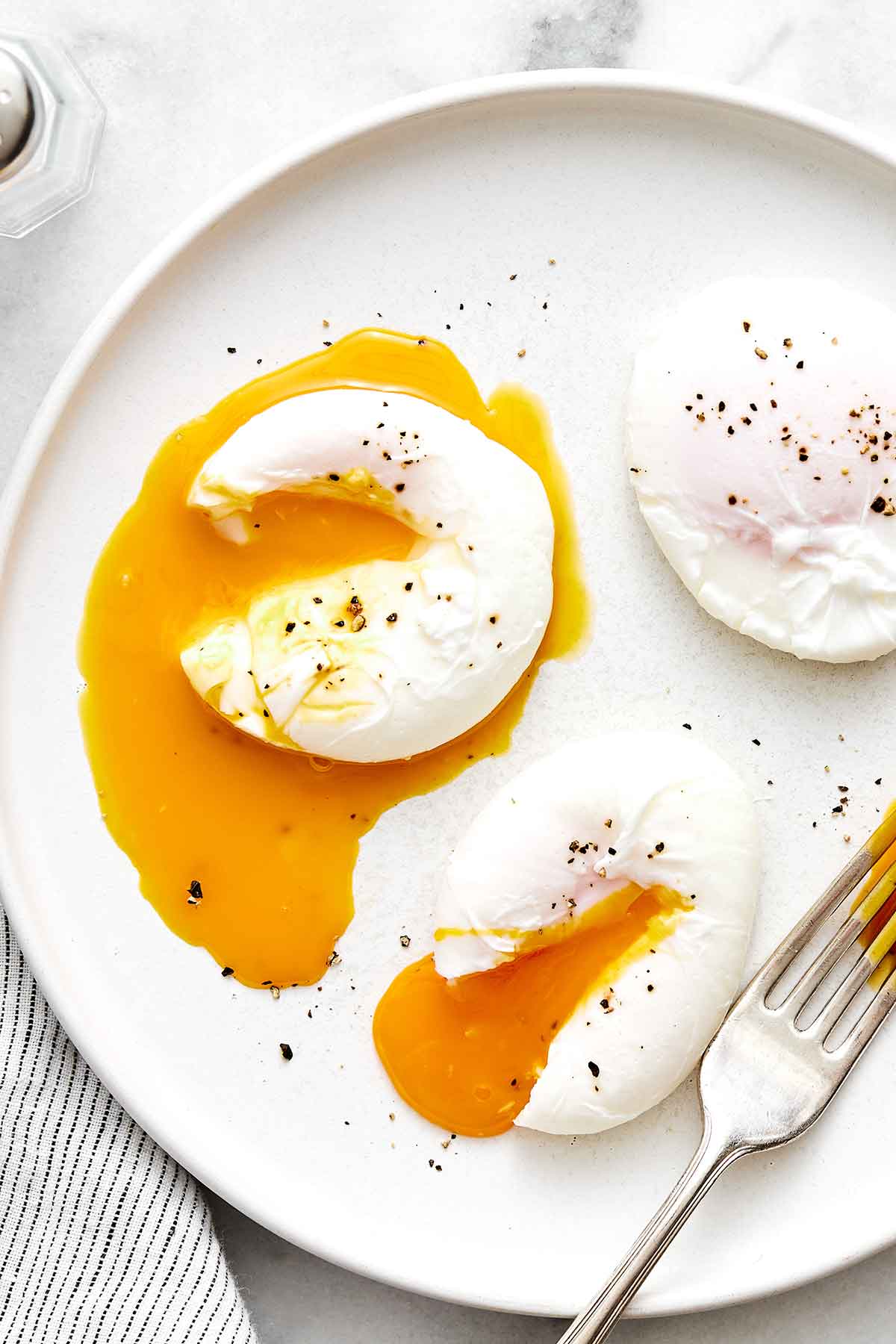
Why You’ll Love These Poached Eggs
Poached eggs are one of those things we order all the time at restaurants, but rarely make at home. Why? I think most would say that it’s difficult to get that perfect, spherical shape without lots of crazy white wispies. But here’s the thing—poaching is actually one of the healthiest ways to cook eggs. So today I’ll share with you a few tips to make the perfect poached egg. I’ve tested every method under the sun (vinegar, salt, swirling vortex, etc) with mixed results. So I’ll share with you the tried-and-true method that works every time! Here’s why you’ll love my poached eggs:
- They’re easier to make than you think. No fancy tools or chef skills are required. And I’ll walk you through the process in my video below, which has been viewed more than 21 million times!
- They instantly elevate any meal. From avocado toast to salads and protein bowls, everything tastes and feels a little more special with an oozy poached egg.
- You can make them ahead of time. Yes, really! They’ll stay good for up to 2 days in the fridge.
How to Make Poached Eggs (Perfectly)
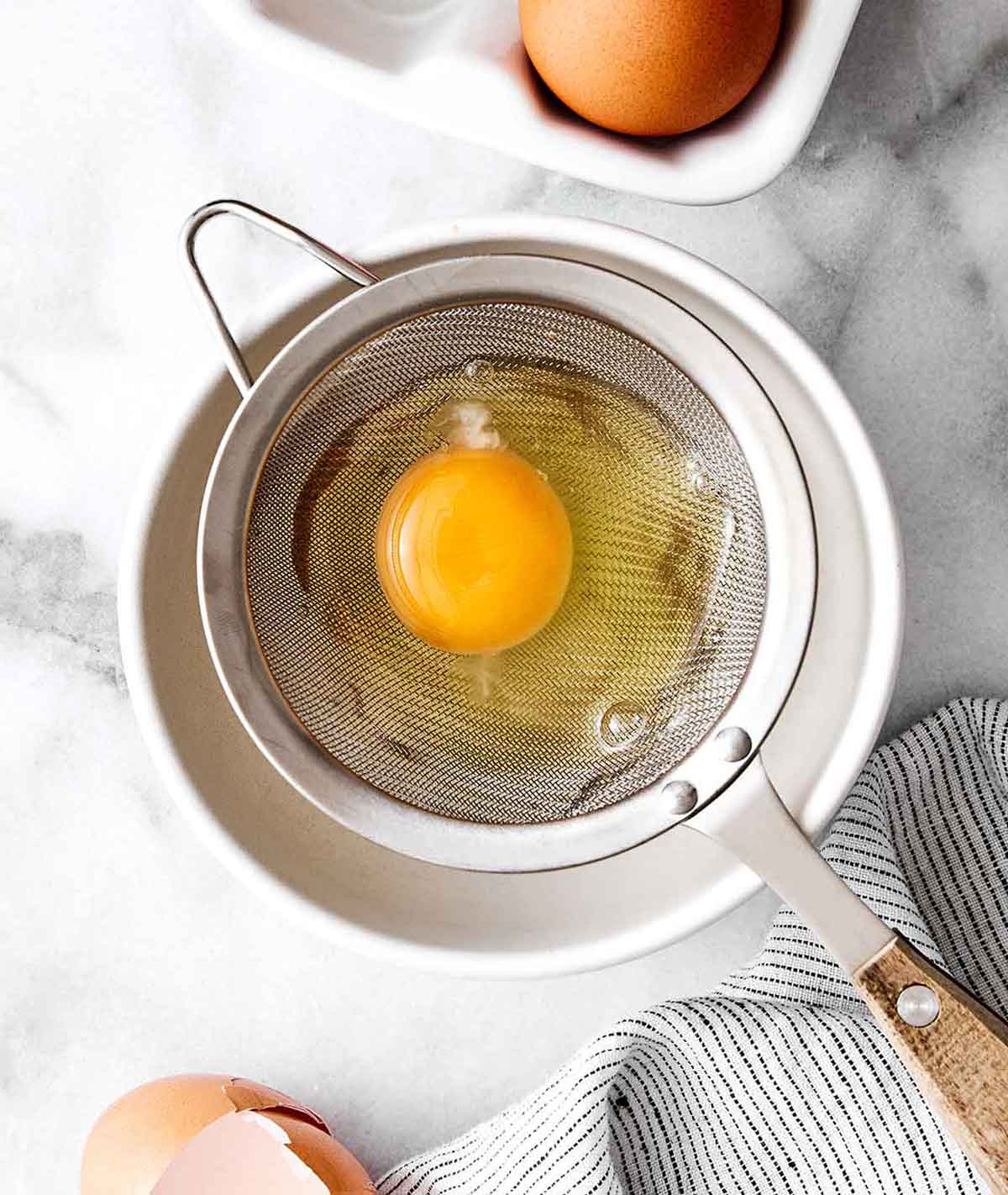
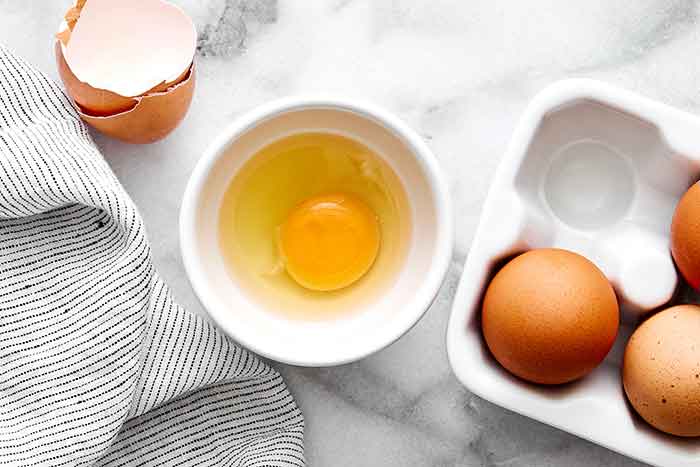
First, crack the egg. Bring a large pot of water to a boil, then reduce the heat to low (or turn it off completely). Crack an egg into a fine-mesh sieve set over a small bowl to strain off the loose, liquidy whites.
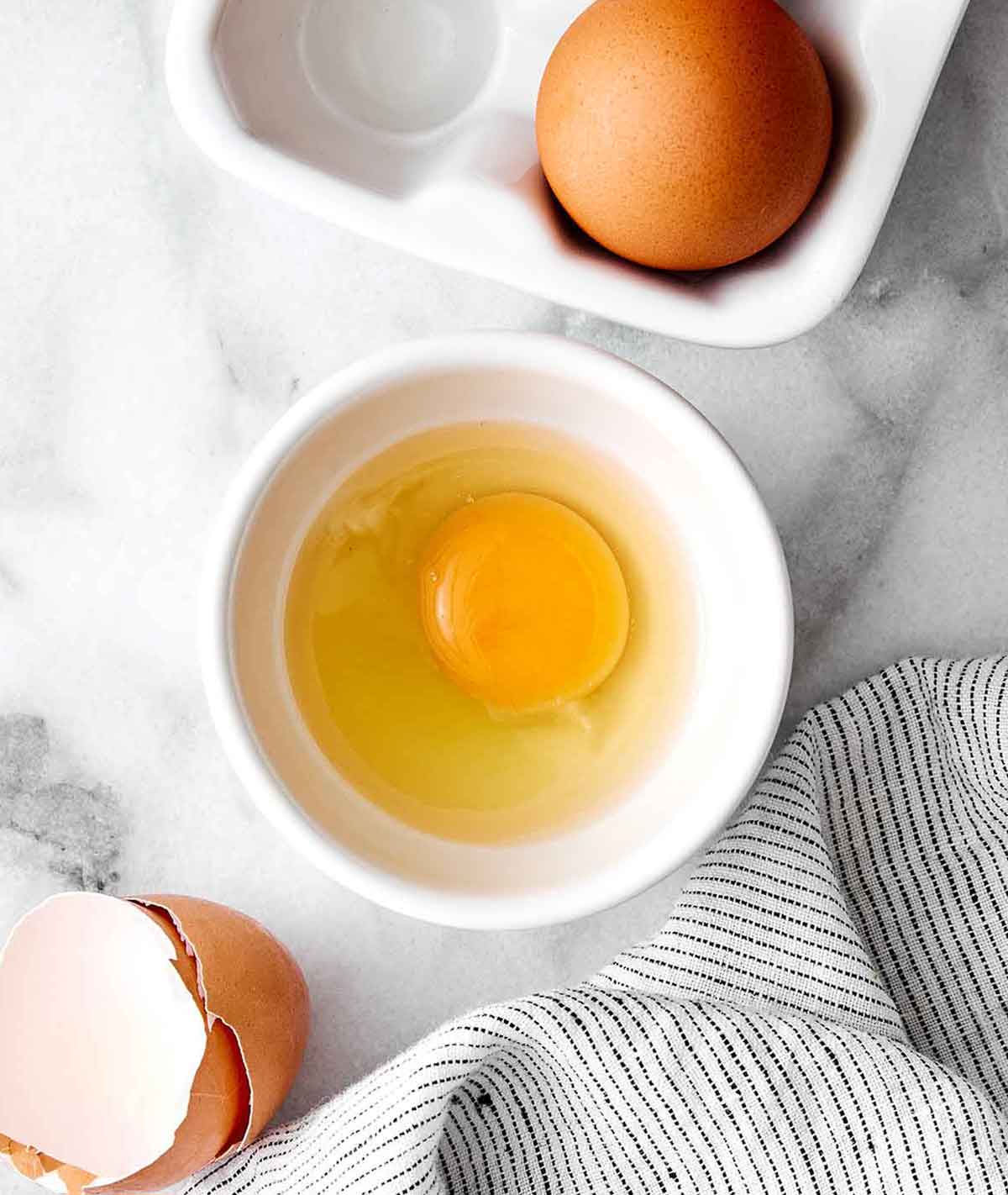
Second, transfer the egg to a small ramekin or bowl.
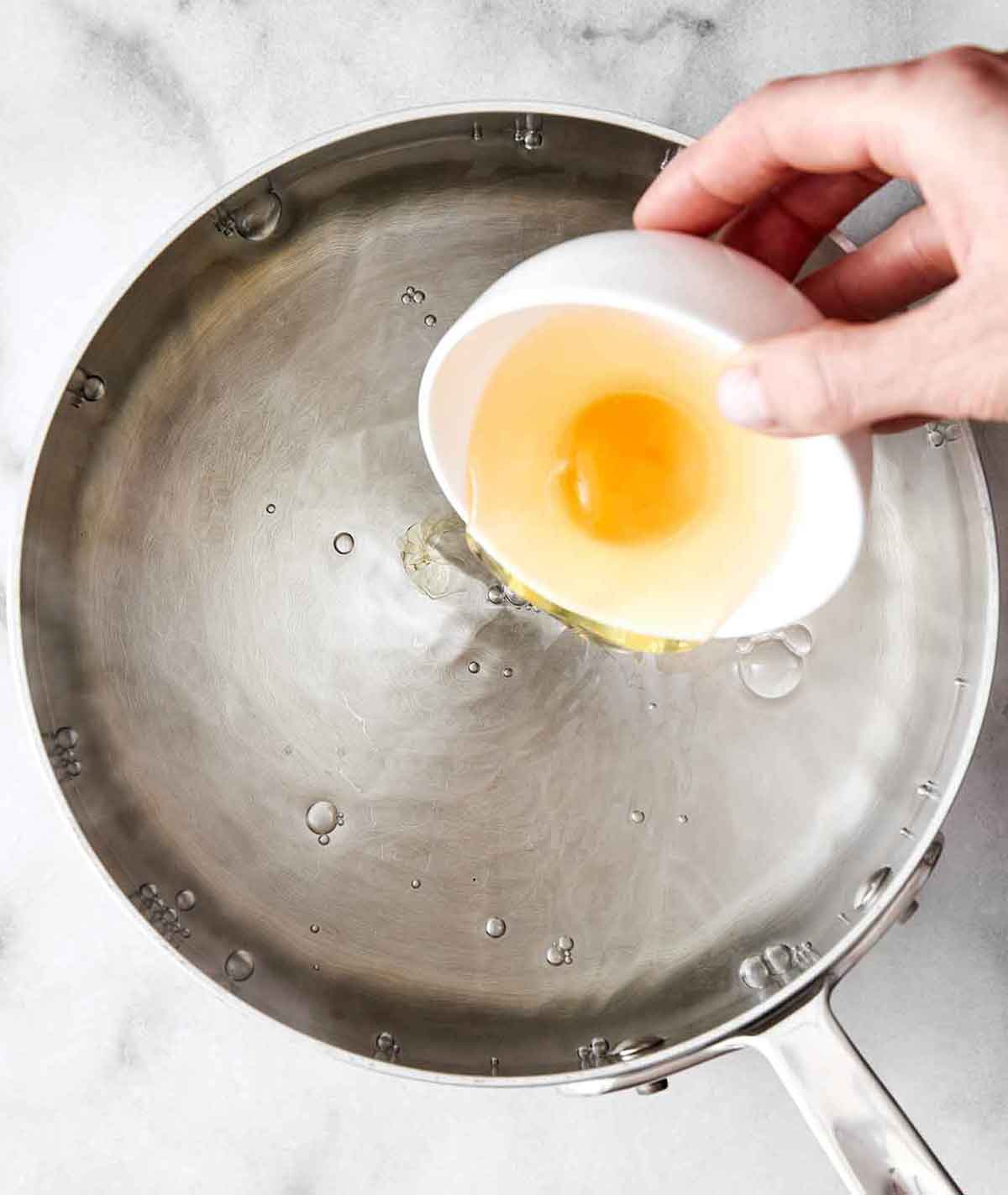
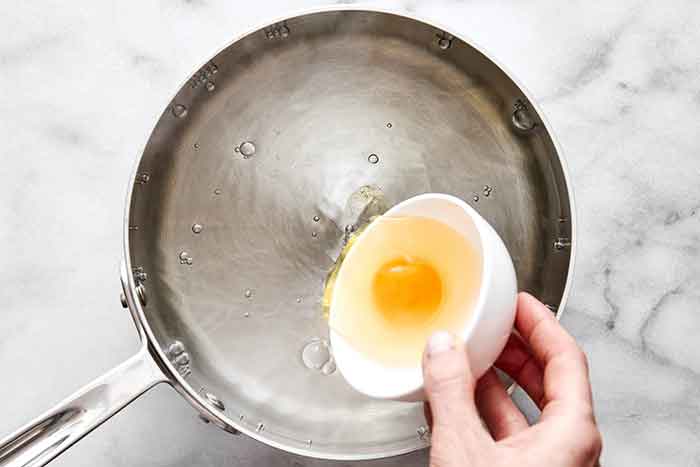
Third, create a vortex. Add 1 tablespoon of light-colored vinegar to the pot and gently stir to create a vortex. Carefully pour the egg into the center of the vortex and set a timer for 3 minutes.
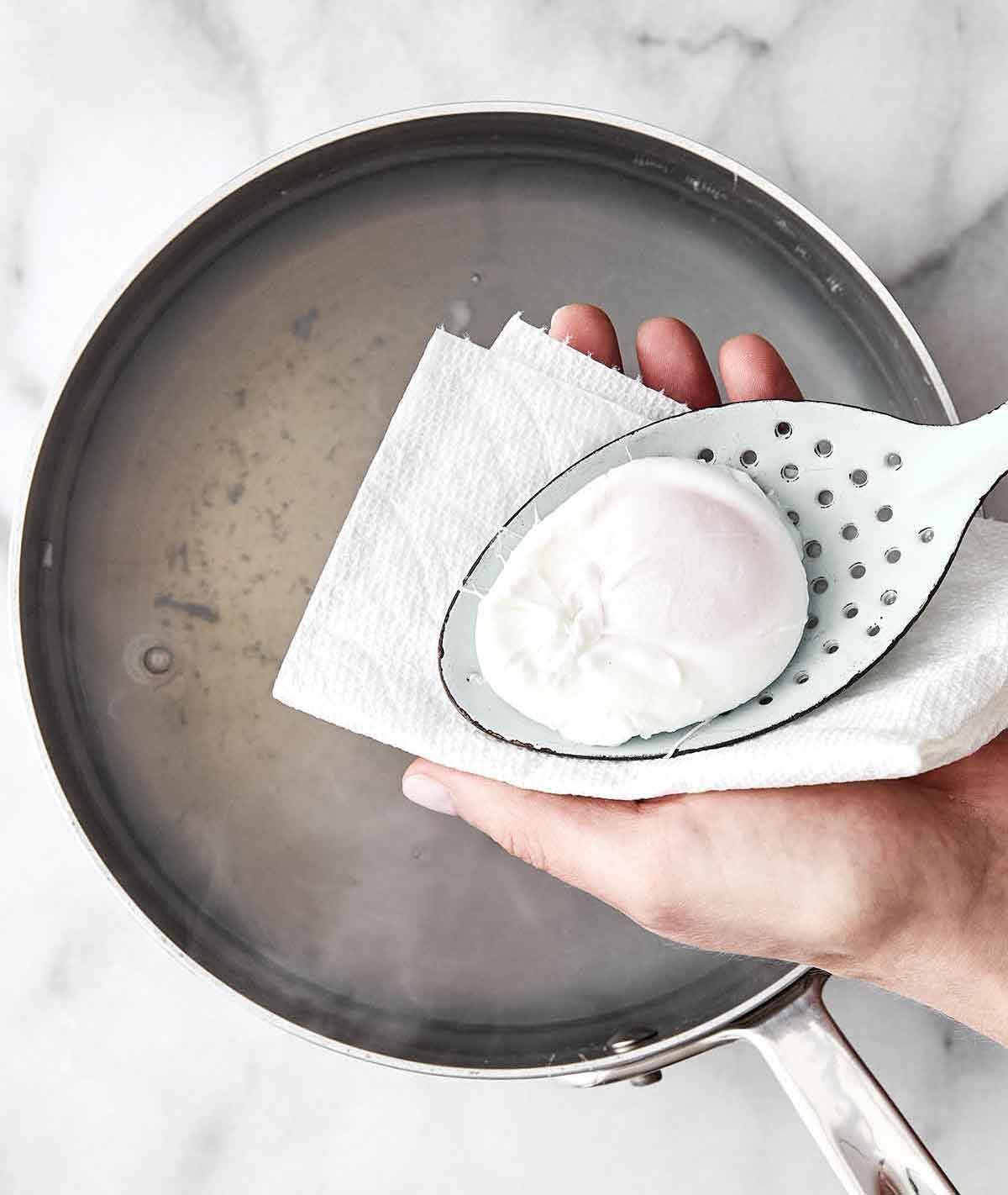
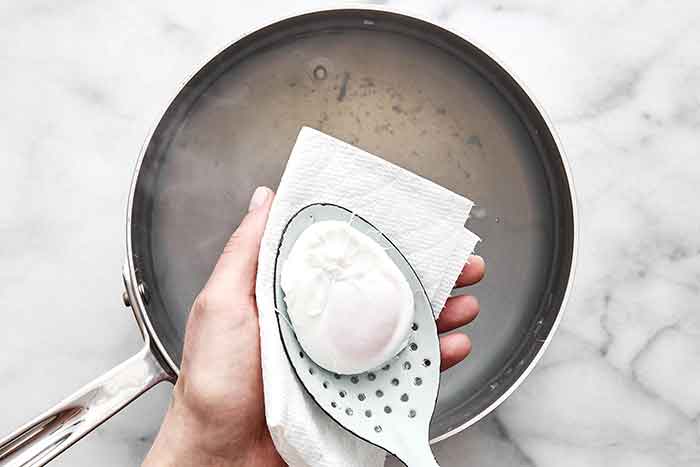
Lastly, remove the egg. Use a slotted spoon to remove the egg and dab it with a paper towel to remove excess water. Then, enjoy it right away for breakfast or with your favorite meals!
How Long Do You Poach Eggs?
For a firm white and runny yolk, you’ll want to poach the eggs for 3 to 4 minutes. I personally love a 3-minute poached egg. And if you plan to poach a batch of eggs ahead of time and reheat later, just keep in mind that reheating may firm up the eggs a little more as well. It’s a small detail, but good to know if you’re aiming for that perfect yolk!
Tips That Do (and Don’t) Work
- Salt: I found that adding salt to the water actually created more white wispies. Salt increases the density of the water, which makes more of the egg white float and splay out. In other words, it creates a not-so-pretty poached egg. Verdict: Don’t do it.
- Vinegar: I was initially dead set against adding vinegar to my water, as I didn’t want my eggs to taste like vinegar. As it turns out, you have to add quite a bit of vinegar to have any vinegar taste transfer to the egg. I found that adding one tablespoon of a light colored vinegar didn’t flavor the egg, but it did help keep the egg white together. Verdict: Optional, but I do it.
- Swirling a Vortex: We’ve all heard that the best method for poached eggs is to drop them in a swirling vortex of water, right? Well, this is true. This does help to create a more spherical shape as the egg white wraps around itself. But here’s the reality. If you’re only cooking one poached egg, it’s a great method. If you’re cooking more than one poached egg, don’t fret about the vortex. Your egg(s) may not be quite as spherical, but you can cook several simultaneously in a large pan, and they’ll still taste darn good. Verdict: Yes, for one egg. No, for more than one egg.
- Fine Mesh Sieve: This is the one tip that consistently produced the best poached egg. When you crack an egg, you’ll notice that there’s a firmer white and a more liquidy white. Well, that liquidy white is what creates all those white wispies. So add the egg to a fine mesh sieve/strainer and the thinner, more liquid white is removed, leaving only the firmer white which will envelop the yolk. Verdict: Do it.
- Ramekin: Most say to crack the egg first into a ramekin, then pour the egg into the water. And I’d have to agree. Using a ramekin ensures that your egg is: 1) properly cracked with an unbroken yolk, 2) there’s no shell in the egg, and 3) you can more easily pour the egg in one swift move. Now, combine this method with the fine mesh sieve and you’ve got a winning combo. Verdict: Do it.
- Deep Pot of Water: After trying both a regular pot of water (4 inches deep) and a large pan filled with water (2 inches deep), I will say that the deeper pot produced a more classical spherical or teardrop shape. This is because as the egg falls in the water, the yolk sinks first and the white trails behind. You can still make poached eggs in a more shallow pot, but the shape will be flatter, similar to a fried egg. Verdict: Use a pot with at least 4 inches of water for that classic shape.

Fresh Eggs Are Best
There’s one tip that can’t be overlooked, and that’s using the freshest eggs possible. This truly is the #1 most important factor in determining the success of your poached eggs. Fresh eggs have firmer whites, less liquidy whites, and just hold their spherical shape better.
Ideally, this would mean buying fresh eggs from a farm the morning you plan to poach them. But let’s be real, most of us aren’t doing this. If you follow the tips above though, you’ll still get great results with eggs you already have on hand. And if your eggs are on the older side ( the ones with extra runny whites), save those for soft-boiled or hard-boiled eggs instead. They’re perfect for that!
Can You Poach Eggs Ahead of Time?
Absolutely! After the eggs have finished poaching, just place them in an ice water bath and store them in the fridge for up to 2 days. When you’d like to eat them, just add some hot water to a small bowl or cup and add the poached egg until it’s warmed up (about 20 to 30 seconds).
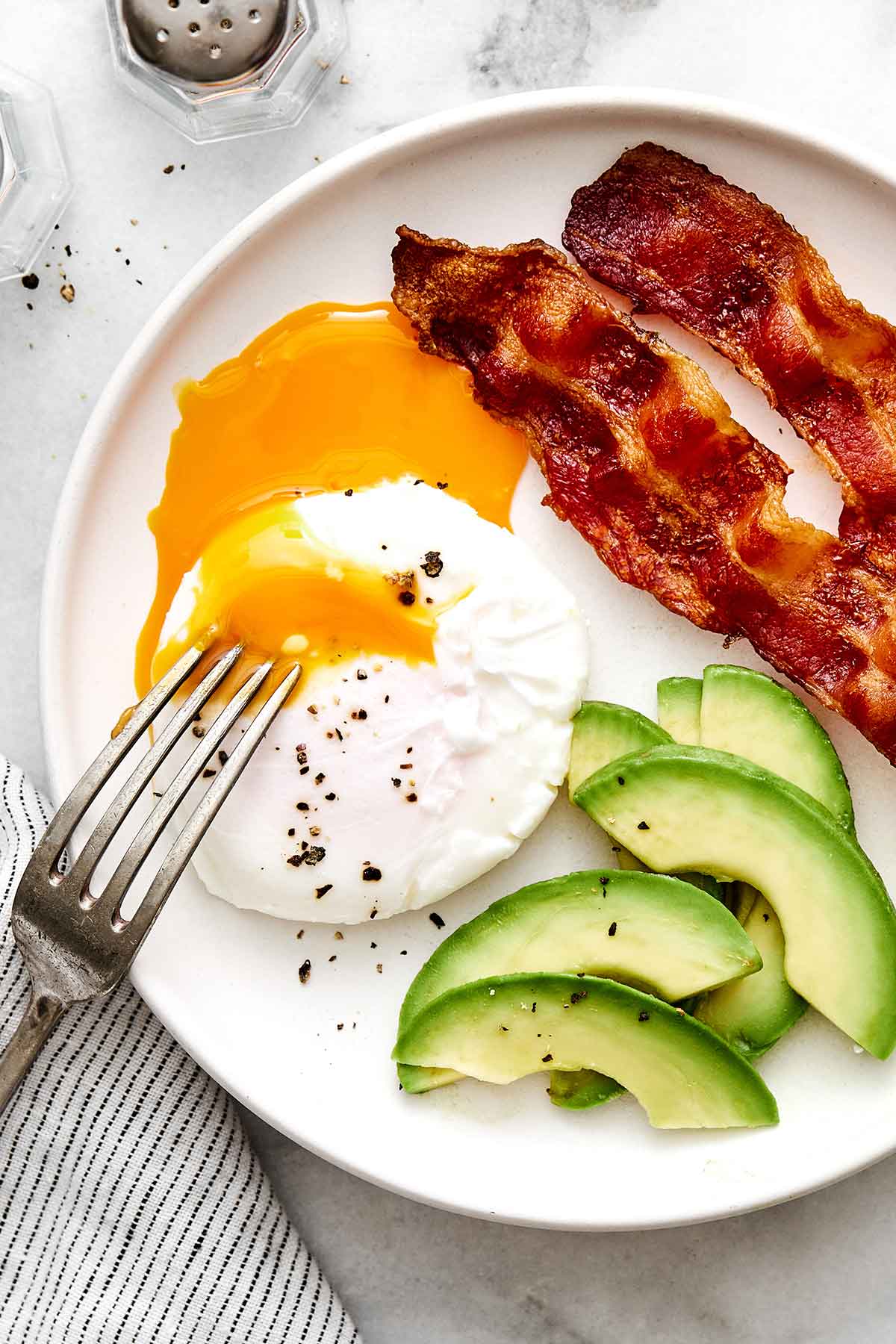
My Best Poached Egg Recipes
- Turkish Eggs: Such a delicious breakfast!
- Healthy Eggs Benedict: With the best hollandaise sauce.
- Asparagus with Poached Egg and Prosciutto: A simple, classic combo.
- Salad Lyonnaise: The perfect breakfast salad!
- Poached Egg with Truffle Salt Grilled Zucchini: A great summer breakfast.
If you try this poached egg recipe, let me know how it turns out in the comments below! Your review will help other readers in the community. And if you’re hungry for more healthy food inspiration and exclusive content, join my free newsletter here.


Description
Video
Equipment
Ingredients
- 1 large egg
- 1 to 2 tablespoons vinegar, optional
Instructions
- Crack the egg. Bring a large pot of water to a boil, then reduce the heat to low. While waiting for the water to boil, crack an egg into a small fine mesh sieve over a bowl. Swirl the egg in the sieve until all the liquidy egg whites have been removed.
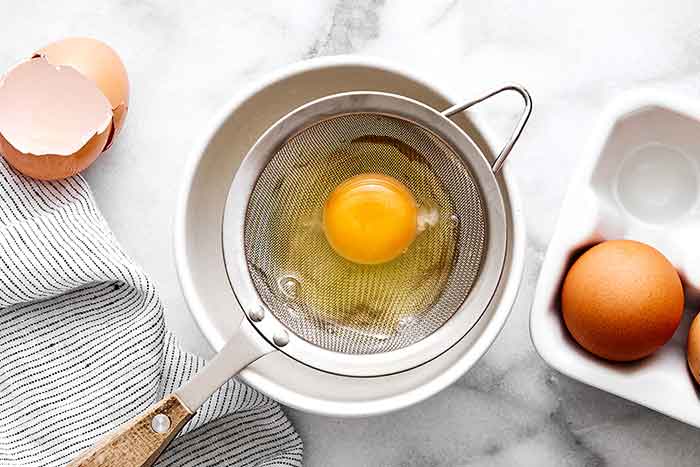
- Transfer the egg to a ramekin or small bowl.
- Create vortex. Stir the vinegar into the water and create a vortex. Add the egg to the middle of the vortex and cook the egg for 3 minutes.
- Remove the egg with a slotted spoon and dab it on a paper towel to remove any excess water. Serve immediately.
Lisa’s Tips
- If making the poached eggs for meal prep or ahead of time, transfer the cooked poached eggs to an ice water bath and refrigerate for a couple of days. When ready to serve, add boiling water to a bowl, then add the cold poached egg and submerge for 20 to 30 seconds or until warmed through. Remove the poached egg with a slotted spoon, dab dry and serve immediately.
- As mentioned above, you can store poached eggs for 4 to 5 days in the fridge. Just make sure they’re in fresh, cold water in a sealed storage container.
- This is the fine mesh strainer I used in the video. It’s the perfect size as it’s small and doesn’t take up much space.
- These are the glass nesting bowls that I use all the time in my kitchen and in my videos.
Nutrition
©Downshiftology. Content and photographs are copyright protected. Sharing of this recipe is both encouraged and appreciated. Copying and/or pasting full recipes to any social media is strictly prohibited.
This recipe was originally posted July 2018, but updated to include new photos and information for your benefit!


“Ah, the elusive art of poaching eggs. It’s like a delicate dance between water and egg, where perfection is the ultimate goal. I must say, this article truly captures the essence of mastering the poached egg technique. The step-by-step instructions provided here are a culinary symphony that promises to elevate our breakfast game to extraordinary heights. From the precise water temperature to the gentle swirl that creates that beautiful, pristine shape, these tips are pure gold. As I read through each sentence, I could almost taste the velvety yolk and the heavenly marriage of textures. Thank you for sharing these invaluable insights on the path to poached egg perfection. With this knowledge, we can now embark on a journey to conquer brunch and impress our friends and loved ones with our newfound culinary prowess. Cheers to the joy of poached eggs done right!”
Thank you so much! Perfectly poached eggs at home! Made them twice already!
At what temperature should eggs be prior to cooking?
Room temperature is fine.
My eggs came out perfectly! I didn’t use a sieve, instead I trimmed the whispy bits while the egg was cooking.
One question- I’ve always used room temperature eggs but I noticed that yours came straight from the fridge. Does the egg temperature change the outcome or do you have any recommendations? Thanks!
Yay, congrats! And for this recipe, I’ve found that the temperature doesn’t really matter.
You definitely nailed this one! I have struggled with flat, ‘wispie’-treading, poached eggs even when using the vortex and vinegar recommendations, but I believe the key here was the sieve. I did only one egg in a small saucepan, so I didn’t get quite the 4-inch water level you suggested (closer to 3 inches) and my egg was definitely not fresh-from-the-farm, but it turned out perfectly poached! I would have taken a picture, but it was so good, I ate it before that occurred to me.
Yay, so thrilled about your poached egg success, Joanne!
The fear of making poached eggs disappeared, thank you so much for sharing the recipe!!
Poached egg video was Great!
Most informative. Off to the kitchen. I could not find the thumbs-up. But I would give 2 thumbs up.
Second attempt at making poach eggs but this time I followed your technique. Best one so far! I appreciate the video! Thank you!
The results were amazing!
Thank you!! I’m a visual learner and the video was incredibly helpful. I was successful on my first attempt!
Helpful for someone who’s never made this before but I cooked for 5+ minutes and still came out runny whites, which was hugely disappointing.
Thank you clear and concise instructions
You’re welcome!
Can you make the perfect poached egg without vinegar?
👍 very good
Hi can I use white vinegar instead of light colour vinegar.
Thanks
Yes, no problem.
This recipe accomplished exactly what I wanted. My eggs were not brand new, but they turned out perfectly. I cooked mine for 3 1/2 minutes. Perfect eggs, thank you.
Glad this worked out perfectly Margot!
Oh wow – my poached eggs are getting better and better / thank you so much for all this advice
Dave the nearly perfect Poacher
Haha, congrats on being a perfect egg poacher, Dave!
Best poached eggs I have ever made. Three minutes and the sieve trick is the beat! Thanks so much.
Glad this method worked out perfectly Jackie!
Perfect poached eggs following this advice, thank you!!
First time to make poached eggs and it worked! Came out perfect. And so easy to follow the instructions. Thank you!
Glad your poached eggs turned out perfectly with this method Raluca!
Your recipe worked perfectly! My poached eggs were beautiful and delicious.
Hi Lisa!! I was so excited to try and make poached eggs this morning after watching your video. This was my first time doing it. I ran into the problem where my egg sunk to the bottom and stayed there. When I was trying to clean my pot I realized that the egg was sitting at the bottom and cooking there which is why it could never float. What did I do wrong? I did follow your instructions with buying brand new eggs, using a strainer, swirling vortex, vinegar, etc and I’m still struggling to see where I fell short. If you have any solutions I would greatly appreciate all advice. Thank you!!
Hi Taylor – you can still swirl water around the egg (gently) to prevent it from sitting on the bottom. Hope your next try turns out even better!
This gives a perfect poached egg every time. Thanks for the sieve tip… that made all the difference in the world. I erased all my other “poached egg” pins after trying this one. 🤭
These poached eggs turned out perfectly! I prefer mine cooked a bit longer so left them in the pot for 4 minutes instead of 3. I was amazed they kept their form and the texture was perfect.
Thank you for sharing this recipe.
Works like a charm!! Thank you!
I made the BEST poached eggs today (3 in total) and it was my first time doing it! :)
Definitely going to make this more often going forward. Thanks a mil!
Awesome! Happy to hear of your poached egg success. :)
My husband normally does the poached eggs . He is unwell so I followed your recipe .
The BEST ever !
Awesome post and video, thanks!
Your video was easy to follow and to duplicate. Thank You for making this recipe doable :) I will definitely tell my friends about your website and videos.
This changed my life! I’ve officially mastered the poached egg! Thank you!!
Happy to hear this method was a success Ashley!
This technique works perfectly; I love your comment that people order poached but don’t do it at home, for all the reasons stated. Now I will never fear making beautiful poached eggs at home! Thanks so much, Marc (retired and now cooking 😂😂😂)
Poached eggs demystified. Your video makes me hungry for these snow white runny beauties of scrumptious protein.
Thank you, Cook.
Good job
I love poached eggs for my workout, thank you for your advice
FINALLY!! A poached egg method that actually WORKED for me!
I had leftover creamed spinach and rather than waste it, I wanted to put it on a toasted English Muffin & top it with a poached egg.
This was PERFECT! Fried egg, soft-boiled egg, poached egg, I want to be able to dip a piece of toast in it.. if I want hard boiled, I’ll make one – HATE middle-of-road yolks!
THANK YOU!! :-)
There’s no going back. Perfect poached eggs on my first try. Followed these directions to a T. Just fulfilled a 2023 resolution to stop making vinegar-y, thread-y eggs. Thank you Lisa.
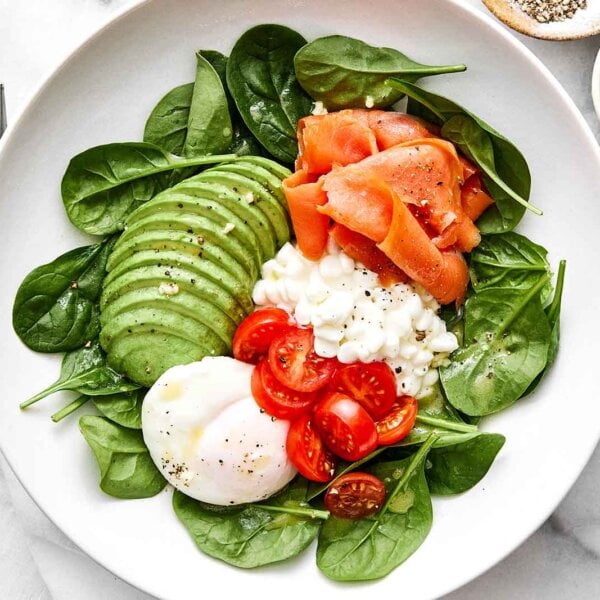
WOW! I have never had anyone explain that you can make poached eggs ahead of time and re-warm them up. This is a game-changer for me! I have spinach and smoked salmon on hand–I can’t wait for breakfast tomorrow, and then an easy avocado toast the next morning–Thank you so much!
Simply the best method. Perfect the first time
First time have successfully made a poached egg with ease!
Thank you for sharing your method and experience. This is the first time my poached eggs succeeded. Now you can count on it that this will be my weekend breakfast. I loved it.
Glad your poached eggs turned out perfectly!
My first attempt at poaching an egg (actually 3 eggs) was a winner. Your instructions gave me the courage to try this for company. Worked perfectly. The eggs were perched atop servings of smoked salmon hash.
Glad your poached eggs turned out perfectly Tim!
Appreciate how thoroughly researched the recipes are. Thank you for all your hard work!
So informative and a great guide. I made the perfect poached egg for the first time ever!
Yay!!
Thank you for the detailed instructions and explanations of why the usual methods aren’t as successful as yours.
My poached eggs on toast were as pretty as yours and had lovely soft texture.
You’re more than welcome Colleen! So happy you had poached egg success.
Your explanation of how to poach eggs requires no special equipment. I don’t have room for a lot of gadgets.
Thank you for helping master the poached egg. Your efforts are truly appreciated.
Happy to hear your poached egg turned out perfectly Craig!
This is the first time I made poached eggs, and they turned out beautifully. Thanks to Lisa for all her research and “do’s” and “don’ts”.
Glad this tutorial helped Jan!
Thanks mate ,I enjoyed your video.!
Glad this tutorial was helpful :)
I did the vortex with two eggs at the same time and they turned out perfect! Thank you!
Thank you so much! Your video was so clear and my poached eggs turned out perfectly my very first time!
Wonderful! I’m so happy you had perfect poached eggs Lucy!